MetaMask swap is a wallet-native route finder for token trades with threat checks
Metamask swap is a wallet-native exchange flow that lets a user trade tokens from inside MetaMask while comparing routes from aggregated liquidity sources and showing approval details before the transaction is signed. It is built for onchain swaps across major networks such as Ethereum, Linea, Polygon, Arbitrum, Optimism, Base, BNB Smart Chain, Avalanche, and Solana support where eligible assets appear in the wallet, with Transaction Shield adding risk signals around the final approval screen.
Quoted routes before you approve a trade
The main value is the quote step. A token trade starts with the asset being sold, the asset being received, the network, and the trade size. The wallet then searches available liquidity sources and returns a route with expected output, gas, price impact, and approval requirements. That quote matters because a USDC-to-ETH trade on Ethereum behaves differently from the same pair on Base or Arbitrum, even when the token symbols look familiar.
Metamask swap keeps the route inside the wallet interface, so the account, balance, network selector, and signature prompt stay in one place. The trade still settles onchain. The wallet prepares the transaction, the user reviews the terms, and the network executes the swap through the selected route after approval.
Where the swap fits inside the MetaMask wallet
More broadly, MetaMask is the account layer: it holds keys, displays assets, connects to dapps, and asks for approval before signatures or transactions leave the device. The swap feature uses that same account context. A user who already holds ETH, USDC, POL, BNB, or another supported token sees available balances and chooses which asset to exchange without pasting a contract into a separate trading screen.
The feature also sits near MetaMask Buy, Sell, Bridge, Card, Perps, Earn, Rewards, Snaps, and the broader Dashboard experience. That placement matters for ordinary wallet use. Someone who buys ETH with cash, receives USDC from another wallet, or bridges funds to Linea reaches the trading screen from the same wallet surface that tracks assets and activity.
Networks, tokens, and gas on the same screen
Every swap belongs to a specific network. Ethereum uses ETH for gas, Polygon uses POL, BNB Smart Chain uses BNB, Solana uses SOL, and many layer 2 networks use ETH for transaction fees. The wallet surfaces the active network before the trade because a token balance on one chain is separate from a token balance on another chain.
Day to day, Metamask swap also exposes a common beginner issue: holding the token to sell does not mean the account has the gas token needed to move it. A wallet with USDC on Ethereum still needs ETH to approve and send transactions. On networks with EIP-1559 style fees, the final confirmation includes fee parameters so the user sees the cost of execution before signing.
Transaction Shield and threat signals during approval
Transaction Shield belongs to the risk-review layer around onchain activity. The wallet already emphasizes security alerts, frontrun protection, Wallet Guard, support, and real-time threat monitoring. In the swap flow, those signals matter most at the approval and confirmation stages, where malicious approvals, suspicious token contracts, and unexpected transaction behavior create the highest risk.
The strongest review habit is specific: read the token being approved, the spending permission, the receiving asset, the expected minimum output, and the network fee before confirming. Metamask swap gives the user a quote, but the wallet signature remains the moment where the account authorizes the action.
Costs built into a quoted token exchange
A swap quote combines several costs. Network gas pays validators or sequencers to process the transaction. Liquidity pricing reflects the pool or market maker route. Price impact rises when a trade is large relative to available liquidity. Slippage settings define how far the execution price is allowed to move before the transaction fails.
Importantly, MetaMask Swaps has historically included a service fee in the displayed quote, and the final screen is where the user sees the current terms for that route. The important distinction is that gas goes to the network, liquidity pricing comes from the route, and the wallet service fee belongs to the swap product. Reading the quote as a full execution package is more useful than focusing on one visible number.
A first trade from ETH to USDC
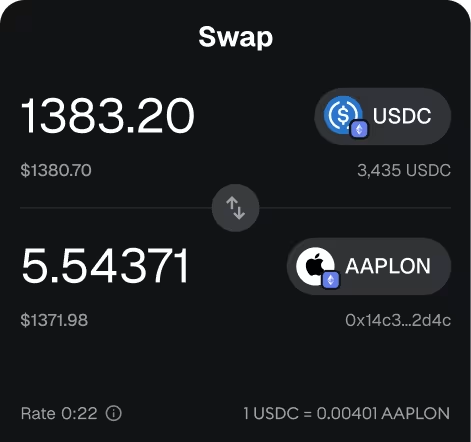
A basic ETH-to-USDC trade shows the workflow clearly. Open the wallet, select the active network, choose ETH as the token to sell, choose USDC as the token to receive, and enter the amount. The quote screen returns expected USDC, estimated gas, and routing information. If the terms match the intended trade, the final confirmation signs the transaction from the selected account.
In practice, Metamask swap handles token approvals differently depending on what is being sold. Selling ETH on Ethereum does not require an ERC-20 approval because ETH is the native gas asset. Selling USDC, DAI, LINK, UNI, or another ERC-20 token requires an approval transaction before the swap transaction when the selected route needs permission to move that token.
When an aggregator beats a single DEX
An aggregator earns its place when liquidity is split across venues. A single decentralized exchange such as Uniswap, Curve, PancakeSwap, Trader Joe, or Sushi presents its own pools and pricing. An aggregated route checks multiple sources and picks the route that fits the requested pair, size, and network conditions. Smaller trades benefit from convenience, while larger trades benefit from avoiding weak liquidity on one pool.
The advantage is strongest with common assets such as ETH, USDC, USDT, DAI, WBTC, SOL, and widely traded governance tokens. Thin tokens still require extra attention because route quality depends on real liquidity, tax mechanics, transfer restrictions, and contract behavior. Metamask swap is most useful when the token pair has enough market depth for a predictable quote.
Limits, failed swaps, and tokens with unusual rules
A failed swap wastes gas when the network accepts the transaction but the route cannot execute under the chosen terms. Fast markets, low slippage tolerance, depleted liquidity, and token contracts with transfer taxes or blacklists create failures. Raising slippage solves only the price-movement part; it does not fix a hostile token contract or a route with poor liquidity.
Some tokens use mechanics that ordinary quote screens struggle to model perfectly. Reflection tokens, rebasing assets, wrapped tokens, bridged representations, and tokens with owner-controlled permissions deserve slower review. The wallet shows the transaction request, but the token contract defines what happens after execution. When the contract rules are unusual, a small test trade gives a cleaner read on behavior than a large first trade.
Where bridge, buy, and perps features differ from swapping
Swapping changes one token into another on a selected network. Buying brings crypto into the wallet from cash rails. Bridging moves value between networks. Perps create long or short exposure without a simple spot token exchange. Keeping those actions separate prevents wrong assumptions about settlement, fees, and risk.
Notably, Metamask swap is the spot-trading piece of that wallet stack. It suits a user who wants USDC for stable value, ETH for gas and DeFi use, POL for Polygon transactions, or a governance token for a specific protocol. The product does not remove onchain responsibility; it packages route search, wallet context, and transaction review into a single trade flow.
Questions people ask about Metamask swap
Does Metamask swap require a separate exchange account?
No separate exchange account is required for the wallet swap flow. The trade uses the selected MetaMask account, the active network, and the assets already visible in that wallet. The user still needs the network gas token, such as ETH, POL, BNB, or SOL, to pay transaction fees. A centralized exchange account is only relevant when moving funds in or out through a separate service.
What tokens are easiest to trade with this wallet swap feature?
Highly liquid assets produce the clearest quotes. ETH, USDC, USDT, DAI, WBTC, SOL, and major network tokens have deeper markets and more routing options than newly launched or lightly traded tokens. A thin asset creates wider price impact, higher slippage risk, and more failed transactions. Token support also follows the active network, so the same ticker on another chain is a separate asset.
Can a quote change before I confirm the transaction?
Yes. A quote reflects available liquidity and network conditions at the moment it is produced. Token prices, gas fees, and route availability move while the user reviews the screen. The slippage setting defines how much price movement the transaction accepts before failing. Refreshing the quote before signing gives a more current view of expected output and gas.
Why does selling an ERC-20 token require an extra approval?
ERC-20 tokens use allowances, so a route needs permission before it moves tokens from the wallet. The approval transaction grants that permission, and the swap transaction performs the exchange. Native gas assets such as ETH on Ethereum do not use the same approval step. Reviewing the spender and amount is important because approvals affect future token movement from that account.