MetaMask swap is a wallet-native quote router for exchanging tokens without leaving your wallet
Metamask swap is a built-in exchange flow that searches aggregated liquidity services, shows a quoted route, and lets you trade tokens from the same wallet where you hold them. It is designed for common swaps such as ETH to USDC, USDC to POL, or network-native tokens to ERC-20 assets on supported chains. The key value is convenience with quote comparison: the wallet prepares the trade, displays costs, and asks you to confirm the transaction.
Quote routing inside the wallet
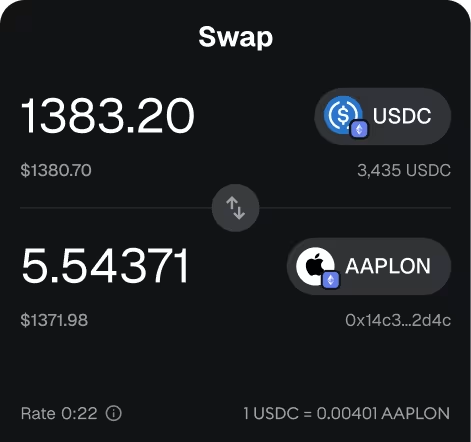
The swap flow starts from the asset and network already selected in MetaMask. You choose the token you want to sell, the token you want to receive, and the amount. The interface then requests quotes from aggregated services that source prices from decentralized exchanges, market makers, and liquidity routes available to that chain. A displayed quote includes the expected output, network cost, estimated price impact, and any service fee shown before confirmation.
This matters because token markets are fragmented. ETH, USDC, WETH, DAI, wrapped Bitcoin assets, governance tokens, and newer Layer 2 tokens trade across many pools with different depths. A single pool might look cheap until slippage is included. Metamask swap reduces that manual search by presenting a route from inside the wallet rather than forcing the user to open separate trading apps for every pair.
Where the trade actually settles
The transaction settles on the network that holds the token being sold. On Ethereum, gas is paid in ETH. On Polygon, gas is paid in POL. On Base, Arbitrum, Optimism, Linea, Avalanche, and BNB Smart Chain, the native gas token for that network pays execution costs. The wallet signs a transaction, broadcasts it to the chain, and the final token balance updates after confirmation.
Settlement is still on-chain, so the quoted output and final output are linked to block timing. When a pool moves before your transaction lands, slippage settings decide whether the trade completes or reverts. A tight slippage tolerance blocks unfavorable execution; a wider tolerance gives the route more room during fast markets. That setting is one of the most important controls in a wallet-based swap.
ETH, USDC, stablecoins, and everyday rebalancing
Most users reach for Metamask swap when they need a direct portfolio adjustment. A person holding ETH might switch part of it into USDC before paying a bill, buying an NFT, joining a DeFi position, or moving funds to a Layer 2. Someone receiving a token from an airdrop might exchange it into ETH for gas or into a stablecoin to reduce exposure to volatility.
Stablecoin swaps are especially common because USDC, DAI, USDT, and chain-specific wrapped assets have deep liquidity on major networks. Larger trades still deserve attention to price impact. A pool with shallow liquidity shows a worse output as size increases, and the route preview exposes that before the signature request appears.
Costs shown before you sign
Every swap has several cost components, and the wallet view brings them together before approval. Network gas pays validators or sequencers. The quote reflects liquidity pool pricing and price impact. Some routes include a MetaMask service fee that is presented as part of the swap experience. Token approvals add another transaction when the asset has not been approved for spending by the swap contract.
These costs explain why a small trade on Ethereum Mainnet feels different from the same trade on Base or Arbitrum. Mainnet gas rises when blockspace is busy, while Layer 2 execution often costs less. The token price can be identical in spirit, yet the all-in received amount changes because gas and routing differ by chain.
Approvals, spending caps, and transaction review
ERC-20 tokens require an approval before a smart contract spends them. The first time you swap USDC, DAI, or another token through a route, MetaMask asks for an approval transaction. After that approval confirms, the swap transaction follows. Setting a spending cap close to the intended trade size reduces the amount a contract is authorized to access.
The confirmation screen deserves a full read. The receiving token, network, estimated output, gas, slippage tolerance, and contract interaction all belong in the review. Metamask swap places the signing step inside the wallet, so the user sees the same account, network, and security prompts that govern other on-chain actions. A wrong network or fake token address creates the biggest avoidable mistake in this workflow.
How to make a first wallet swap
A first swap is straightforward once the wallet is funded with both the sell token and the gas token for that network. The most reliable path is to start with a liquid pair and a modest amount, then read the quote details before signing. This avoids learning the interface during a high-value or fast-moving trade.
- Open MetaMask and choose the account that holds the token.
- Select the correct network, such as Ethereum, Base, Arbitrum, Optimism, Linea, Polygon, Avalanche, or BNB Smart Chain.
- Choose the token to sell and the token to receive.
- Review the quoted output, gas, route details, slippage, and approval request.
- Confirm the transaction and wait for the balance to update after settlement.
If the token list does not show the asset you expect, the contract address is the decisive identifier. Tickers repeat across chains, and imitation assets use familiar symbols. The safest workflow is to add the intended asset by its contract address and then trade only on the network where that contract exists.
When a bridge or centralized exchange fits better
Metamask swap is built for exchanging tokens on a selected supported network, while a bridge is used to move value between networks. If the goal is turning ETH on Ethereum into ETH on Arbitrum, the main action is bridging. If the goal is turning ETH into USDC while staying on Ethereum, the swap flow is the right category of tool.
A centralized exchange also serves a different job. It is useful for fiat cash-in, bank withdrawals, large order-book trades, and account-based order management. The wallet route is stronger when the user already holds assets on-chain and wants a direct token-to-token exchange without moving custody away from the wallet during the trade.
Security features around the swap flow
More broadly, MetaMask places swaps inside the same wallet environment that includes transaction simulation, security alerts, and user-controlled signing. Those features help interpret contract requests before the trade leaves the wallet. They do not replace judgment, but they make the signing moment clearer because approval prompts, token movements, gas, and recipient contract details appear in one place.
Transaction Shield, Wallet Guard, and other warning systems in the broader MetaMask experience focus on suspicious interactions and risky transaction patterns. The most useful habit is simple and specific: pause when a swap requires an unexpected approval, switches networks without intent, or shows a token that matches a ticker but not the intended contract.
Why routing quality changes by network
Liquidity is local to each chain. USDC depth on Base differs from USDC depth on Ethereum, and a token that trades actively on Arbitrum might have thin pools on Polygon. Routing quality improves when the selected chain has several deep venues for the pair. It worsens when the token is new, the pool is small, or most activity sits on another network.
That is why Metamask swap is strongest for liquid tokens and established network pairs. ETH, WETH, USDC, DAI, POL, AVAX, BNB, and major Layer 2 assets have enough market structure for quote aggregation to matter. Thin meme tokens and obscure wrapped assets still demand extra scrutiny because a quote can look functional while price impact absorbs a large share of the trade.
Good fit for self-custody traders
The best use case is a wallet owner who wants to rebalance, prepare gas, convert rewards, enter a DeFi position, or exit an unwanted token without leaving MetaMask. The experience joins asset custody, network selection, quote discovery, and signing in one workflow. Metamask swap is less about advanced charting and more about executing a clear on-chain exchange from the wallet interface.
Advanced traders still use dedicated decentralized exchanges, aggregators, and order-book venues when they need limit orders, professional routing controls, or deeper analytics. For everyday wallet activity, this route keeps the trade close to the account where the assets live, while still exposing the core numbers that decide whether the exchange is worth signing.
Common questions about Metamask swap
Why did my received amount differ from the quote?
The final amount changes when pool prices move before the transaction confirms or when the route executes within the slippage range you accepted. The quote is a current estimate, while the blockchain settles later. If movement exceeds your slippage tolerance, the transaction reverts instead of completing at a worse rate than your settings allow.
Which tokens work best for wallet-based swaps?
Liquid assets with active pools work best, including ETH, WETH, USDC, DAI, and major tokens on established Layer 2 networks. New, thinly traded, or duplicate-ticker tokens create more price impact and token-identification risk. The contract address matters more than the symbol because different assets can share the same ticker across networks.
Does a failed swap still cost gas?
Yes. A reverted transaction still consumes gas because validators or sequencers processed the attempted execution. The unsold token returns to the wallet, but the network fee is spent. Failed swaps commonly come from tight slippage, sudden price movement, insufficient gas, expired quotes, or approval and swap steps being completed out of order.
Is a token approval required every time?
No. Approvals are tied to a token, account, network, and spending contract. The first swap with an ERC-20 token commonly requires approval, while later swaps can reuse that permission until the spending cap is reached or revoked. Network-native assets such as ETH do not use the same ERC-20 approval step when spent as the sell asset.
Recovering a missing token after a completed swap, what should I check?
Check that MetaMask is on the same network where the swap settled, then add the received token by contract address if it is not visible in the asset list. A successful transaction changes the on-chain balance even when the wallet interface has not displayed the token automatically. The transaction history also shows which asset contract received the output.